|
CORONARY HEART DISEASES AND RISK FACTORS IN |
||||||||||||||||||||||||||||||||||||||||||||||||||||||||||||||||||||||||||||||||||||||||||||||||||||||||||||||||||||||||||||||||||||||
| Rajeev Gupta, Priyanka Rastogi, Deepali Hariprasad, Beena Mathur, AK Bhardwaj |
||||||||||||||||||||||||||||||||||||||||||||||||||||||||||||||||||||||||||||||||||||||||||||||||||||||||||||||||||||||||||||||||||||||
| Monilek Hospital and Research Centre, Jaipur; Department of Home Science, University of Rajasthan, Jaipur; and SMS Medical College, Jaipur 302004 | ||||||||||||||||||||||||||||||||||||||||||||||||||||||||||||||||||||||||||||||||||||||||||||||||||||||||||||||||||||||||||||||||||||||
 SUMMARY SUMMARY |
||||||||||||||||||||||||||||||||||||||||||||||||||||||||||||||||||||||||||||||||||||||||||||||||||||||||||||||||||||||||||||||||||||||
| Coronary heart disease has assumed epidemic proportions in India and many other developing countries. The disease is more prevalent in urban populations and there is a clear gradient in its prevalence from rural to semi-urban to urban populations in epidemiological studies. Although the disease has a low prevalence among the rural Indian populations it is progressively increasing and in terms of absolute numbers the burden of coronary heart disease in these subjects is large. The disease occurs at a younger age in rural subjects as compared to those in urban populations. There is a strong positive correlation of increase in coronary heart disease in rural subjects with primordial risk factors of faulty diet, tobacco consumption, and sedentary lifestyle. Major coronary risk factors- high blood pressure, high cholesterol levels, low HDL cholesterol, insulin resistance and diabetes are also escalating in these populations and correlate positively with the increase in coronary disease (p<0.05). There is an urgent need to develop cardiovascular disease risk factor surveillance systems in Indian rural populations. | ||||||||||||||||||||||||||||||||||||||||||||||||||||||||||||||||||||||||||||||||||||||||||||||||||||||||||||||||||||||||||||||||||||||
|
INTRODUCTION |
||||||||||||||||||||||||||||||||||||||||||||||||||||||||||||||||||||||||||||||||||||||||||||||||||||||||||||||||||||||||||||||||||||||
| Cardiovascular diseases account for a large proportion of all deaths and disability worldwide. Global Burden of Disease (GBD) Study reported that in 1990 there were 5.2 million deaths from cardiovascular diseases in economically developed countries and 9.1 million deaths from the same causes in developing countries.1 However, whereas about one-quarter of all cardiovascular disease deaths occurred in persons who were less than 70 years of age in the developed world, more than about half of these deaths occurred in those less than 70 years in the developing world.2 It has been predicted that by the year 2020 there will be an increase by almost 75% in the global cardiovascular disease burden. Almost all of this increase will occur in developing countries. (Table 1). | ||||||||||||||||||||||||||||||||||||||||||||||||||||||||||||||||||||||||||||||||||||||||||||||||||||||||||||||||||||||||||||||||||||||
| Table 1: Cardiovascular deaths by region in the years 1990 and 2020. Global Burden of Disease Study 1990 | ||||||||||||||||||||||||||||||||||||||||||||||||||||||||||||||||||||||||||||||||||||||||||||||||||||||||||||||||||||||||||||||||||||||
|
||||||||||||||||||||||||||||||||||||||||||||||||||||||||||||||||||||||||||||||||||||||||||||||||||||||||||||||||||||||||||||||||||||||
| The situation in India is more alarming. Reddy3 reported that mortality from cardiovascular diseases was projected to decline in developed countries from 1970 to 2015 while it was projected to almost double in the developing countries (Figure 1). In the GBD Study it was reported that of a total of 9.4 million deaths in India in 1990, cardiovascular diseases caused 2.3 million deaths (25%). 1.2 million deaths were due to coronary heart disease and 0.5 million due to stroke.1 It has been predicted that by 2020 there would be a 111% increase in cardiovascular deaths in India. This increase is much more than 77% for China, 106% for other Asian countries and 15% for economically developed countries.2 Comparative Risk Assessment Collaborating Group reported results of GBD Study-2000.4 Of the selected 26 risk factors, it was concluded that high blood pressure, tobacco, alcohol intake and high cholesterol ranked among the major factors contributing to worldwide mortality (Table 2). The impact of these risk factors was more in developed countries but in terms of absolute numbers these factors were more prevalent in developing countries. All these risk factors contribute to cardiovascular diseases. It is inferred that cardiovascular diseases are already a major cause of death in developing countries surpassing developed countries in terms of absolute numbers. The cause for this increase of cardiovascular disease and atherosclerotic coronary heart disease (CHD) in developing countries has been described as epidemiological transition, a term initially suggested by Omran.5 At any given time different countries of the world and even parts within a country are in different phases of this transition and Gupta et al classified this transition into seven phases. Accordingly, tribal to rural to urban transition is associated with escalating sedentary lifestyle, and increased intake of calories, fats and salt; this is associated with increase in body-mass index, hypertension and coronary heart disease. The final stage is characterised by improving lifestyles and decline in cardiovascular diseases.6 |
||||||||||||||||||||||||||||||||||||||||||||||||||||||||||||||||||||||||||||||||||||||||||||||||||||||||||||||||||||||||||||||||||||||
| Table 2: Mortality (thousands of deaths, male/female) due to cardiovascular risk factors in Americas, Europe and South Asia. Global Burden of Disease Study 2000 | ||||||||||||||||||||||||||||||||||||||||||||||||||||||||||||||||||||||||||||||||||||||||||||||||||||||||||||||||||||||||||||||||||||||
|
||||||||||||||||||||||||||||||||||||||||||||||||||||||||||||||||||||||||||||||||||||||||||||||||||||||||||||||||||||||||||||||||||||||
| Yusuf et al7 recently reclassified the transition into 5 phases. Accordingly, in the first phase of transition the predominant cardiovascular diseases are rheumatic heart diseases and other infection and nutrition related cardiovascular diseases. As the socioeconomic development takes place, in the second phase, infectious burden is reduced, nutrition improves and diseases related to hypertension become more important. With continuing change in diet, adoption of sedentary lifestyle and increasing smoking, atherosclerotic diseases related to cardiovascular system increase. The fourth stage is characterised by increasing public response to the epidemic in form of increased prevention efforts associated with decline in mortality. The fifth phase has been added to describe a new development in Eastern Europe where socioeconomic upheaval has been linked to increased cardiovascular mortality in these countries. Rural India is currently in phase I and II of the epidemiological transition with predominant cardiovascular disease being nutrition related, rheumatic heart disease and hypertension with a low prevalence of coronary heart disease. However, the urban India has progressed to stage II-III of this transition and there is a massive coronary heart disease epidemic. In some parts of rural India, such as Kerala, transition to stage IV has already occurred. | ||||||||||||||||||||||||||||||||||||||||||||||||||||||||||||||||||||||||||||||||||||||||||||||||||||||||||||||||||||||||||||||||||||||
| EPIDEMIC OF CORONARY HEART DISEASE IN INDIA |
||||||||||||||||||||||||||||||||||||||||||||||||||||||||||||||||||||||||||||||||||||||||||||||||||||||||||||||||||||||||||||||||||||||
| Whether ancient Indians knew CHD is conjectural. As in European civilizations, ancient Indian physicians considered that disease occurrence resulted from a mismatch of the three humors in the body. Some recent authors have highlighted the fact that coronary heart disease was well known to ancient Indian sages and scholars,10 although analytical investigation of the scriptures shows that it is unlikely.11 Scientific involvement in the epidemiology of CHD and hypertension in India emanated from observations that these diseases were present in significant numbers in urban subjects in metropolitan cities and contributed to a large number of hospital admissions.12 Mukherjee (Calcutta) in the early twentieth century and Vakil (Bombay) in 1940's highlighted the high prevalence of CHD. A review reported that CHD cases as proportion of total CVD admissions in the middle of last century have varied from 10-25% depending on the site and specialisation of the hospital.13 | ||||||||||||||||||||||||||||||||||||||||||||||||||||||||||||||||||||||||||||||||||||||||||||||||||||||||||||||||||||||||||||||||||||||
Mammi et al compared the incidence of acute myocardial infarction in a Kerala Medical College Hospital from 1969 to 1988 and reported that as compared to 220 cases in 1969, 338 cases in 1970 and 1500 cases in 1975, the incidence was 3001 in 1978, 4901 in 1982 and 5284 in 1987.14 Occurrence of acute myocardial infarction in younger age-groups was also highlighted. Serial studies from rural areas of India have not been reported but a study from Rajasthan reported that CHD contributes to 8% of patients attending a general physician's clinic in a rural area.15 The age of presentation of acute coronary syndrome is about five to ten years earlier in Indian patients. In a recent Indian multicentre study that analysed data from 4081 subjects it was reported that acute coronary syndromes occurred at a mean age of 56.6±12 years in men and 61.8± 10 years in women.16 In developed countries the average age of presentation is higher and the US National Registry of Myocardial Infarction reported an average age of 66.0±0.05 years.17 10 years in women.16 In developed countries the average age of presentation is higher and the US National Registry of Myocardial Infarction reported an average age of 66.0±0.05 years.17 |
||||||||||||||||||||||||||||||||||||||||||||||||||||||||||||||||||||||||||||||||||||||||||||||||||||||||||||||||||||||||||||||||||||||
| MORTALITY STATISTICS |
||||||||||||||||||||||||||||||||||||||||||||||||||||||||||||||||||||||||||||||||||||||||||||||||||||||||||||||||||||||||||||||||||||||
| As in many other developing countries, mortality statistics in India are conspicuous by absence of a coherent death-certification process. Data are available from the Registrar General's Office regarding a broad classification of deaths based on sample registration system in rural populations. Category of CHD is under circulatory disorders. This category also includes deaths from other non-coronary cardiac diseases, valvular heart diseases, anemia, and high blood pressure. Another overlapping category is deaths due to senescence and may include all causes of death in old age. Identifying these caveats, Reddy3 used these mortality statistics in predicting the disease burden of CHD in India. Accordingly, the all-cause mortality per 100,000 subjects is expected to decline from 1158 for men and 1165 for women in the year 1985 to 879 in men and 790 in women in the year 2000 and to 846 for men and 745 for women in 2015 AD. This decline is attributed to decrease in deaths due to infections and perinatal afflictions. Circulatory diseases mortality is projected to increase from 145/100,000 in men and 126/100,000 in women in 1985 to 295 in men and 239 in women by the year 2015. These diseases would replace infections as the largest cause of mortality. If the expected increase in modernisation of villages and risk-factors also takes place the rise in cardiovascular disease mortality is likely to be greater. Sample Registration Survey system has reported mortality data in rural India. Trends in caused of death in rural India shows that circulatory system deaths as proportion of total deaths increased from 7.4% in 1961 to 8.8% in 1971, 8.8% in 1981, 10.9% in 1989 and 11.2% in 1994.18 In some urban Indian populations mortality data are derived from medical certification of causes of deaths. It has been reported that diseases of circulatory system (ICD codes 390-459) have increased in men from 19.1% in 1982 to 22.9% in 1994 and in women from 17.3% to 20.5%.18 Though there are major drawbacks in deriving concrete conclusions from these data, there is a clear increasing trend in cardiovascular disease mortality in rural subjects in India. In the GBD Study (2000)4 it was reported that in South Asian region (including India) of the total annual mortality of 6.36 million in men and 5.76 million in women a large number of deaths were attributable to hypertension, high cholesterol, overweight, physical inactivity and poor diet. In combination, all these risk factors led to 1.79 million deaths in men and 1.63 million deaths in women (28% of total deaths). Tobacco caused 0.78 million deaths in men and 0.13 million deaths in women. Thus, a large absolute burden of cardiovascular disease deaths in developing countries, especially India, that was forecast in early 1990's has been confirmed. |
||||||||||||||||||||||||||||||||||||||||||||||||||||||||||||||||||||||||||||||||||||||||||||||||||||||||||||||||||||||||||||||||||||||
| EPIDEMIOLOGICAL STUDIES |
||||||||||||||||||||||||||||||||||||||||||||||||||||||||||||||||||||||||||||||||||||||||||||||||||||||||||||||||||||||||||||||||||||||
| In the absence of reliable mortality data, estimates of the burden of disease have mostly been based on morbidity indicators from population based cross-sectional surveys. Morbidity surveys involve problems of sample design, sample size, standardization, and measurement errors. Indian CHD epidemiological studies have been reviewed earlier.19,20 Initial epidemiological studies were performed in the late 1950s in Agra (Mathur, 1960)21 and Delhi (Padmavati, 1962).22 Techniques applied in these were later used on a larger scale in most of the other Indian studies. The diagnostic criteria for CHD were as defined by the WHO.23 We identified 14 studies using uniform diagnostic criteria performed between 1960 and 2002; seven in urban, two in semi-urban and five in rural areas. | ||||||||||||||||||||||||||||||||||||||||||||||||||||||||||||||||||||||||||||||||||||||||||||||||||||||||||||||||||||||||||||||||||||||
| Table 3: Indian CHD Prevalence Epidemiological Studies | ||||||||||||||||||||||||||||||||||||||||||||||||||||||||||||||||||||||||||||||||||||||||||||||||||||||||||||||||||||||||||||||||||||||
|
||||||||||||||||||||||||||||||||||||||||||||||||||||||||||||||||||||||||||||||||||||||||||||||||||||||||||||||||||||||||||||||||||||||
| The prevalence of CHD in various studies is shown in Table 3. In the urban population the prevalence increased from 1.05% (Agra, 1962)21 and 1.04% (Delhi, 1962)22 to 6.60% (Chandigarh, 1968).24 In recent years a consistent high prevalence of CHD has been reported from Delhi (9.67%, 1990)25, Jaipur (7.8%, 1995)26, Chennai (9.0%, 2001)27 and Jaipur (8.1%, 2002)28. In semi-urban populations of Haryana and Kerala the prevalence has increased from 3.6% (1975)29 to 7.4% (1993).30 In rural populations the prevalence increased from 2.06% (Haryana, 1974)31 and 1.69% (Vidarbha, 1988)32 to 2.71% (Haryana, 1989)33, 3.09% (Punjab, 1994)34, 3.46% (Rajasthan, 1994)35 and 5.00% (Himachal, 2002).36 Rural-urban comparison shows that while prevalence has increased two-fold in rural areas (2.06% in the 1970s to 4.14% in the 1990s) the prevalence in urban areas has increased nine-fold (1.04% in the early 1960s to 9.45% in the mid 1990s). There is evidence of CHD increase from rural to semi-urban and urban areas with the highest prevalence reported from metropolitan Delhi. This clearly shows the importance of socio-economic factors associated with societal transition explaining the CHD epidemic in India.36 |
||||||||||||||||||||||||||||||||||||||||||||||||||||||||||||||||||||||||||||||||||||||||||||||||||||||||||||||||||||||||||||||||||||||
| CORONARY RISK FACTORS AND LOWER CHD PREVALENCE IN RURAL POPULATIONS |
||||||||||||||||||||||||||||||||||||||||||||||||||||||||||||||||||||||||||||||||||||||||||||||||||||||||||||||||||||||||||||||||||||||
| The incidence of CHD in any population is associated with the relative shifts in its biological characteristics -serum lipids, blood pressure, blood glucose, insulin, thrombogenic factors, and others. This hypothesis is based on Pickering's observation that sick individuals are just the extreme of a continuous distribution and Keys' postulation of sick individuals and sick populations.37 These shifts are a consequence of changes in life-styles -smoking, physical activity, alcohol intake and rich diet as well as psychosocial influences that accompany economic transition.36 Hence, to understand the epidemiology of CHD it is important to review the economic and related transition in India and its effect on diet and life-style. The World Health Organisation (WHO) has defined these risk factors as "primordial risk factors" that include smoking, sedentary lifestyle and faulty diet.38 | ||||||||||||||||||||||||||||||||||||||||||||||||||||||||||||||||||||||||||||||||||||||||||||||||||||||||||||||||||||||||||||||||||||||
| PRIMORDIAL RISK FACTORS |
||||||||||||||||||||||||||||||||||||||||||||||||||||||||||||||||||||||||||||||||||||||||||||||||||||||||||||||||||||||||||||||||||||||
| Of the four established major coronary risk factors- high blood cholesterol levels, smoking, hypertension and a rich diet- two factors- rich diet and cigarette smoking- are aspects of lifestyle that became mass phenomena in the twentieth century in Western industrialised countries.37 The other two- above optimal levels of serum cholesterol and of high BP- are endogenous traits prevalent in a majority of adult population of the human race which are unmasked as a result of mass consumption of rich diet and a sedentary lifestyle. Thus population-wide eating pattern and other primordial risk factors are the key in three of these four established major coronary risk factors in India.38 The World Health Organization41 has concluded that the dietary changes that take place as Indian populations move up the socio-economic scale appear to be (i) increased intake of legumes, vegetables, milk, and in case of non-vegetarians foods of animal origin; (ii) substitution of coarse grain by polished grains resulting in a decreased fibre intake; (iii) increase in intake of edible fat with increasing consumption of saturated hydrogenated fat in the middle class and Indian ghee in more prosperous segments; (iv) increase in intake of calories and sweets; and (v) increase in overall intake of energy in relation of expenditure resulting in obesity. FAO data (1961-1996) indicate a 104% increase in wheat consumption in India associated with decreased intake of millet (-33%), sorghum (-31%) and pulses (-45%). In case of carbohydrates, there has been an increase in refined sugars (206%), starchy vegetable (111%), other vegetables (43%), and fruits (32%).41 In India, per capita consumption of major fats and oils has increased significantly during the last 30 years.42 In 1958 it was 5.62 Kg per year which increased to 5.79 in 1961, 5.23 in 1966, 5.85 in 1971, 5.21 in 1976, 6.48 in 1981 and 6.97 in 1986 (r=0.64, p=0.168). This consumption is much lower than in EEC countries (38.98), USA (39.72), Canada (34.83) and Japan (19.84). However, diet of 17% of rural poor does not include any edible oil and about 5% of the population consumes nearly 40% of the available fat, hence the increase in the fat consumption is mainly in urban middle and upper classes where CHD is rampant. Reliable data regarding the consumption of Indian ghee (clarified butter) are not available as this fat is produced and consumed as a household item. It has been reported that 27.5% of the total milk production is utilized for its production and in 1990, 750 thousand tonnes of Indian ghee was consumed, i.e., 0.91 kg/person/year.42 An important and unstudied aspect of the fat intake is effect of various Indian cooking habits on fatty acid composition. Shallow-frying, which is widely prevalent in Indian kitchens, can lead to oxidation of fatty acids and formation of cholesterol oxides which are toxic to arterial endothelium.43 Deep-frying increases the temperature of oils to very high levels and can change chemical composition of the fats. Trans-fatty acid composition of various Indian fats is not well defined although it has been reported in high amounts in hydrogenated oils.43 |
||||||||||||||||||||||||||||||||||||||||||||||||||||||||||||||||||||||||||||||||||||||||||||||||||||||||||||||||||||||||||||||||||||||
| SMOKING AND TOBACCO USE |
||||||||||||||||||||||||||||||||||||||||||||||||||||||||||||||||||||||||||||||||||||||||||||||||||||||||||||||||||||||||||||||||||||||
| WHO has estimated that at present tobacco causes 2.5 million premature deaths per annum world-wide that increased more than ten-fold since 1950.1 The mortality from tobacco will rise to 3.0 million during the 1990's and to 10 million in 2020's.1 With consumption projected to rise still further, the actual figures may be greater. According to World Bank, tobacco related pulmonary and cardiovascular diseases have become major community health problems in South Asia. Tobacco is already killing more than these estimates and GBD Study has reported that in the year 2000, tobacco caused 4.9 million deaths of the total 55.8 million deaths per annum worldwide.4 Tobacco is the most important coronary risk factor among the Indian rural populations. Cigarette and tobacco smoke is known to contain many toxic and vasoactive substances. Bidi (tobacco rolled in Diospyrus melanoxylon leaf) is the commonest form of tobacco smoked in India. Studies have shown that bidi smokers face similar risk of hypertension and CHD as cigarette smokers despite the fact that tobacco content is less than a quarter. This may be because of smoking habits- as bidi smoke is required to be inhaled more frequently per minute than a cigarette to keep it burning- as well as reason that bidi may contain yet unidentified toxic substances per unit weight.44 The smoking habit became epidemic with the growth of the cigarette-manufacturing industry. It is thus a recent, widespread and unnatural behaviour, compared to older ones. In the whole population smoking should be reduced in amount and in frequency with the final aim of eliminating the habit completely. Low-tar, low-nicotine cigarettes offer no alternative solution to the abandonment of smoking so far as the heart is concerned. Habits of smoking and use of smokeless tobacco consumption need to be curtailed. The problem of environmental tobacco exposure cannot be underestimated.4 One of the most convincing studies of the harmful effect of passive smoking was conducted in China among non-smoking women with CHD and matched controls. A nearly 2-fold greater odds of CHD among women who were exposed to tobacco at work persisted after adjustment for other risk factors, and a linear trend with the amount of tobacco exposure was observed.45 In both urban and rural subjects in India smoking and tobacco use is widely prevalent. Our studies have shown that 39% urban men26 and 51% rural men35 in Rajasthan either smoked or consumed tobacco in some form. Other Indian epidemiological studies report smoking prevalence in adult men between a low of 10% (rural Punjab)34 to a high of 80% (rural Haryana).31 Smoking rates are significantly lower in women but consumption of tobacco in other forms is highly prevalent.46 Tobacco production which is surrogate for its consumption is increasing at a very high rate in India. According to Economic Survey of India39 (1994-95), tobacco production registered a growth of 2.4% in 1991-92, 5.9% in 1992-93 and 21.3% in 1993-94. The tobacco production was 75.5 thousand tonnes in 1971, 100.2 in 1981, 91.9 in 1986, 115.8 in 1991 and 124.2 in 1993. According to Human Development Report,40 in India tobacco consumption per adult person per year in kg was 0.7 in 1974-76, 0.8 in 1990 and is projected to increase to 0.9 in the year 2000. This is in contrast to established market economies where there is a decline in cardiovascular disease mortality and the tobacco consumption (kg/year) is projected to decline from 2.9 in 1974-76 to 2.2 in 1990 and 1.8 in the year 2000. Epidemiological studies in India confirm that smoking is an independent risk factor for CHD. We reported a multivariate odds ratio of 2.50 (95% confidence interval 1.09-5.73) for smoking and electrocardiographic Q-wave prevalence in rural men,47 and 1.23 (0.79-1.93) in urban men.26 Pais et al reported similar odds for bidi-smoking and CHD risk in a case-control study.48 Smoking is also an independent risk factor for hypertension.49 Tobacco is an important component all CHD prevention and control programs. In India also, the present findings emphasise that tobacco avoidance and cessation must be an important component of CHD prevention strategies. |
||||||||||||||||||||||||||||||||||||||||||||||||||||||||||||||||||||||||||||||||||||||||||||||||||||||||||||||||||||||||||||||||||||||
| OTHER MAJOR RISK FACTORS |
||||||||||||||||||||||||||||||||||||||||||||||||||||||||||||||||||||||||||||||||||||||||||||||||||||||||||||||||||||||||||||||||||||||
| Hypertension is a major problem in both urban and rural populations in India. Studies that report prevalence of hypertension in Indian populations have been reviewed.50,51 Studies that used older WHO guidelines have shown a steadily increasing trend in hypertension prevalence in rural populations. Recent studies from cities of Ludhiana, Jaipur and Mumbai show prevalence of more than 10%. In rural populations there has been a steady increase in prevalence of hypertension. Padmavati (1959)22 in Delhi reported prevalence of 1.99%, Shah (1959)52 in Bombay reported a prevalence of 0.52% and Gupta (1977)29 in Haryana reported a prevalence of 3.57%. Subsequent studies have shown gradually increasing hypertension prevalence in rural areas of India. Recent studies in North India have reported a higher prevalence of 7.08% in Rajasthan.53 In semi-urbanised South Indian rural populations the prevalence has been reported as high as 17.8% in recent years.54 Thus, there has been a significant increase in hypertension prevalence in India since the 1950's. The increase is significantly more in urban subjects than in the rural. The epidemiological studies of cholesterol measurement in India are hampered by lack of uniform assay technique which have resulted in large variation in measured levels. However, cholesterol levels measured by enzyme-based assays have shown an increase as seen in recent studies in both urban and rural populations.55 Prevalence of dyslipidemias has not been adequately reported from India. Confusion exists about the population norms in absence of prospective studies. We used the US National Cholesterol Education Program guidelines to classify dyslipidemia among men in Rajasthan (rural=202, urban=199).34 High-risk and borderline-high cholesterol 200 mg/dl was in 24.2% and low HDL cholesterol (<35 mg/dl), which was the most prevalent dyslipidemia, in 30%. Reddy et al have reported prevalence of hypercholesterolaemia (200 mg/dl) in industrial, urban and rural populations in Delhi.56 In men the prevalence was 30.9%, 36.8%, and 16.3% and in women it was 21.7%, 39.7% and 16.3% respectively. The increase in total cholesterol levels in Indians is in contrast to declining mean population cholesterol in USA. Secular tends in the age-adjusted mean serum cholesterol levels of adults aged 20-74 years have been reported. In 1962 the mean cholesterol was 217 mg/dl in men and 223 mg/dl in women. It was 214 mg/dl and 216 mg/dl in 1974, 211 mg/dl and 215 mg/dl in 1980 and 206 mg/dl and 208 mg/dl in 1991 for males and females respectively.57 A similar declining trend in mean cholesterol is seen in North American and Western European cohorts of Seven Countries Study.58 On the other hand in many developing countries of Asia, trends similar to India are seen. In China mean cholesterol are 175.2±38 mg/dl with a significant rural urban difference as in India. In Taiwan mean cholesterol levels range from 110 to 180 mg/dl and in Singapore it is 220 mg/dl.59 Increasing population cholesterol levels in India and a rural-urban gradient reiterates its importance in CHD epidemic in India.The prevalence of non-insulin dependent diabetes mellitus (NIDDM), a strong risk factor for CHD, varies in different geographic regions and in different ethnic groups in India.60 At the turn of the century diabetes was uncommon in India and was present in higher socio-economic groups but it has been realised that Indians and south Asians as an ethnic group have a high risk of developing diabetes. The first authentic data on the prevalence of NIDDM in India was a result of a multicentric study conducted by the Indian Council of Medical Research in early seventies and reported a prevalence of 3.0% in urban and 1.3% in rural populations.60 Ramachandran et al61 using the WHO criteria found a prevalence of 5% in an urban township in South India. In another study Ramachandran et al found an age-adjusted prevalence of 8.2% in urban populations and 2.4% in rural subjects in South India.62 This study, while showing a wide difference in the prevalence of diabetes in urban and rural populations, also highlighted the fact that diabetes was as common in urban Indians as in emigrant Indians. Prevalence of impaired glucose tolerance which may be a precursor of diabetes was equal in urban and rural subjects showing that Indians have a genetic predisposition for diabetes.62 Insulin resistance state has been recognized as a risk factor of importance in CHD among South Asians living in Britain. Features of this syndrome include resistance to insulin-stimulated glucose uptake, central obesity, glucose intolerance, hyperinsulinemia, hypertension, increased VLDL triglyceride, decreased HDL cholesterol, increased IDL and small dense particles in LDL fraction. McKeigue et al63 explained the high incidence of CHD mortality in South Asians settled in Britain on the basis of a greater prevalence of diabetes as compared to the British (20% vs. 5%) and insulin resistance. He noted that mean fasting and post-load insulin levels were higher in South Asians than in Europeans, and the elevated insulin levels were generally associated with components of insulin resistance syndrome. Accompaniments of insulin resistance syndrome, viz., truncal obesity, low HDL cholesterol levels, high triglyceride levels and hypertension, are widely prevalent in India. Mishra et al64 have recently reviewed the epidemiology of insulin resistance syndrome in India. Multiple small studies have reported that the prevalence of insulin resistance varied from 5% to 60% depending on the criteria used. This is more than in other ethnic groups. |
||||||||||||||||||||||||||||||||||||||||||||||||||||||||||||||||||||||||||||||||||||||||||||||||||||||||||||||||||||||||||||||||||||||
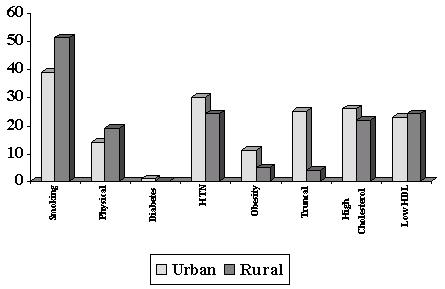
| Figure 1: Urban-rural differences in coronary risk factor prevalence in Indian men. Data from the Jaipur Heart Watch-1 Study in Rajasthan.67 Similar results have been reported in other studies from North India by Gupta et al,29 Reddy et al,56 and Chadha et al.66 | ||||||||||||||||||||||||||||||||||||||||||||||||||||||||||||||||||||||||||||||||||||||||||||||||||||||||||||||||||||||||||||||||||||||
 |
||||||||||||||||||||||||||||||||||||||||||||||||||||||||||||||||||||||||||||||||||||||||||||||||||||||||||||||||||||||||||||||||||||||
| URBAN-RURAL DIFFERENCES IN CORONARY RISK FACTORS |
||||||||||||||||||||||||||||||||||||||||||||||||||||||||||||||||||||||||||||||||||||||||||||||||||||||||||||||||||||||||||||||||||||||
| The study of urban-rural and geographic differences can provide useful information regarding pathogenesis of CHD in an ethnic group. The prevalence of CHD is low in rural populations of India and has not changed significantly over the years.12 The prevalence is significantly more and increasing in urban Indians. To examine whether there are important risk factor differences in urban as compared with rural populations, some studies have been performed. In hospital based studies, a higher prevalence of CHD in urban Indians was initially reported in 1950's. Epidemiological studies in Agra,21 Delhi22 and Chandigarh24 in1960s confirmed the high prevalence in urban subjects.12 In a case-control study, Bordia et al (1974),65 determined prevalence of coronary risk factors in urban and rural subjects. In rural subjects smoking was a more important risk factor as compared to urban subjects where sedentary lifestyle, obesity and hypercholesterolaemia were important. Gupta et al (1975),29 Chadha et al (1997),66 Reddy et al (1997),56 and Gupta et al (1997)67 performed comparison of CHD and risk factor prevalence in urban and rural populations of Northern India using similar epidemiological tools (Figure 1). CHD prevalence in urban subject was twice that of the rural. Greater prevalence of major coronary risk factors- sedentary lifestyle, obesity, truncal obesity, hypertension, high cholesterol, low HDL cholesterol, and diabetes was observed in urban subjects in these studies. This has important public health connotation as control of these risk factors could lead to control of the cardiovascular disease epidemic in India.8 |
||||||||||||||||||||||||||||||||||||||||||||||||||||||||||||||||||||||||||||||||||||||||||||||||||||||||||||||||||||||||||||||||||||||
| REFERENCES |
||||||||||||||||||||||||||||||||||||||||||||||||||||||||||||||||||||||||||||||||||||||||||||||||||||||||||||||||||||||||||||||||||||||
|
||||||||||||||||||||||||||||||||||||||||||||||||||||||||||||||||||||||||||||||||||||||||||||||||||||||||||||||||||||||||||||||||||||||
Available Volumes
| EDITOR IN CHIEF |
| Dr.
Rajeev Gupta (MD PhD FACC) |
 |
| HON. EDITOR |
| Dr.
Soneil Guptha (MD FACC FESC) |
USEFUL LINKS |
 |