| EVALUATION OF A NOVEL REHABILITATION PROGRAMME IN SECONDARY CORONARY HEART DISEASE PREVENTION |
||||||||||||||||||||||||||||||||||||||||||||||||||||||||||||||||||||||||||||||||||||||||||||||||||||||||||||||||||||||||||||||
| RB Panwar, DK Agarwal, BK Gupta, R Gupta | ||||||||||||||||||||||||||||||||||||||||||||||||||||||||||||||||||||||||||||||||||||||||||||||||||||||||||||||||||||||||||||||
| Department of Cardiology, SP Medical College and Associated Group of Hospitals, Bikaner 334001 Rajasthan | ||||||||||||||||||||||||||||||||||||||||||||||||||||||||||||||||||||||||||||||||||||||||||||||||||||||||||||||||||||||||||||||
 SUMMARY SUMMARY |
||||||||||||||||||||||||||||||||||||||||||||||||||||||||||||||||||||||||||||||||||||||||||||||||||||||||||||||||||||||||||||||
| Objective: To test the efficacy of a hospital-based cardiac rehabilitation exercise program among patients with stable coronary heart disease. | ||||||||||||||||||||||||||||||||||||||||||||||||||||||||||||||||||||||||||||||||||||||||||||||||||||||||||||||||||||||||||||||
| Methods: Successive patients (n= 2556) visiting the cardiology department in years 1993 to 1997 were offered the cardiovascular rehabilitation program. 904 subjects (men 601, women 303) agreed to the informed consent and were enrolled for the study and randomly divided into two groups. Group A (hospital based n=621, men 408, women 213) received supervised physical exercises while Group B (home based n=283, men 193, women 90) received unsupervised physical exercises. Both the groups were matched for age, sex, diabetes, hypertension status, body-mass index (BMI), lipid levels, coronary artery disease status and treadmill MET score at baseline. All the subjects received usual advice regarding smoking cessation and diet modification. Cardiovascular medications were according to discretion of treating physician. No person was on lipid-lowering drug therapy. The rehabilitation program involved advice regarding smoking cessation, diet and exercise using gradually increasing load of walking, cycling, step-ladder exercises and calisthenics involving body stretching and bending. | ||||||||||||||||||||||||||||||||||||||||||||||||||||||||||||||||||||||||||||||||||||||||||||||||||||||||||||||||||||||||||||||
Results: At the end of 6-week follow-up, in Group A there was significant decline in BMI (24.2±5.5 to 23.1±5.1 Kg/m2); total cholesterol (194.8±39 to 160.7±95 mg/dl); LDL cholesterol (126.0±47 to 101.6±59 mg/dl) and triglycerides (133.3±69 to 122.3±72 mg/dl). In both men and women there was a significant decline (% decrease, 95% confidence interval) in prevalence of hyperLDLcholesterolaemia (men -23.3%, 16.2 to 30.4; women -21.6%, 11.3 to 31.9) and hypertriglyceridaemia (men -13.2%, 6.4 to 20.0; women -16.3%, 6.5 to 26.1) (p<0.01). Exercise performance increased significantly in Group A (treadmill METs score 5.5±1.7 to 7.1±1.2; METs 6.0 men 26.2%, 19.2 to 33.2, women 17.8%, 8.1 to 27.5) (p<0.01). In Group B subjects there was insignificant decline in BMI (21.9±4.4 to 21.6±4.2 Kg/m2) and no significant change in lipid levels, prevalence of hypercholesterolaemia and hypertriglyceridemia. The exercise performance increased in men (METs6.0 16.0%, 4.7 to 27.3) and not in women. 6.0 men 26.2%, 19.2 to 33.2, women 17.8%, 8.1 to 27.5) (p<0.01). In Group B subjects there was insignificant decline in BMI (21.9±4.4 to 21.6±4.2 Kg/m2) and no significant change in lipid levels, prevalence of hypercholesterolaemia and hypertriglyceridemia. The exercise performance increased in men (METs6.0 16.0%, 4.7 to 27.3) and not in women. |
||||||||||||||||||||||||||||||||||||||||||||||||||||||||||||||||||||||||||||||||||||||||||||||||||||||||||||||||||||||||||||||
| Conclusions: This cardiac rehabilitation program is an effective method to modify coronary risk factors and improve functional capacity in coronary heart disease patients. | ||||||||||||||||||||||||||||||||||||||||||||||||||||||||||||||||||||||||||||||||||||||||||||||||||||||||||||||||||||||||||||||
| INTRODUCTION |
||||||||||||||||||||||||||||||||||||||||||||||||||||||||||||||||||||||||||||||||||||||||||||||||||||||||||||||||||||||||||||||
| Secondary prevention in coronary heart disease (CHD) emphasises control of major modifiable coronary risk factors- smoking, high blood pressure, high low-density lipoprotein (LDL) cholesterol, diabetes, and sedentary lifestyle.1 A combination of lifestyle modification and pharmacological interventions are available for control of most of these factors. In many instances aggressive lifestyle interventions have been replaced by simple pharmacological measures, e.g., drugs are often the first-line approach for control of high LDL cholesterol and often supplant tedious and unpleasant dietary interventions. Beta-blockers, aspirin, statins and angiotensin-converting enzyme (ACE) inhibitors have been shown to be of benefit in large randomised trials.2 Regular physical activity helps in control of multiple cardiovascular risk factors.3 However, encouraging regular physical activity involves a major lifestyle change and to achieve it in an individual is difficult and often results in non-compliance and failure. | ||||||||||||||||||||||||||||||||||||||||||||||||||||||||||||||||||||||||||||||||||||||||||||||||||||||||||||||||||||||||||||||
| The benefits of cardiac rehabilitation and secondary prevention are broad and compelling.4 Many controlled trials of exercise after myocardial infarction and in stable angina have reported reduction in overall mortality and mortality from cardiovascular causes.4-12 Trials of exercise combined with nutritional counselling have demonstrated a slowing of the atherosclerotic process and decreased rates of subsequent hospitalisation and death. Even in USA, where the awareness of formal cardiovascular rehabilitation programs is high only 10 to 20 percent of appropriate candidates participate in such programs.4 The reasons of low participation rates include the geographical mal-distribution of these programs, failure of physicians to refer many target groups- particularly the elderly and women, cost, and patient unfriendly nature of such programs. Home-based rehabilitation programs that are directed by physicians and coordinated by nurses and technicians have been developed as a way of expanding the delivery of secondary prevention services but compliance is poor.13-15 In developing countries there is a very low awareness of rehabilitation programs among physicians and patients and there is a need for simple, patient friendly and inexpensive rehabilitation programs to promote physical activity.16 Various approaches to encourage physical activity have included assessment of current physical activity levels, identification of barriers to increased physical activity, advocacy of increased physical activity and development of individualised regimen of aerobic and resistance training specifying frequency, intensity, duration and types of exercise. The ultimate goal of physical activity rehabilitation program is to increase regular physical activity, strength, and physical functioning, and expenditure of at least 1000 kcal per week in physical activity.4,16 We developed a novel low-cost physical activity based cardiac rehabilitation program and tested the efficacy in a hospital-based population of stable CHD patients that included survivors of acute coronary syndromes and chronic stable angina patients. | ||||||||||||||||||||||||||||||||||||||||||||||||||||||||||||||||||||||||||||||||||||||||||||||||||||||||||||||||||||||||||||||
| METHODS |
||||||||||||||||||||||||||||||||||||||||||||||||||||||||||||||||||||||||||||||||||||||||||||||||||||||||||||||||||||||||||||||
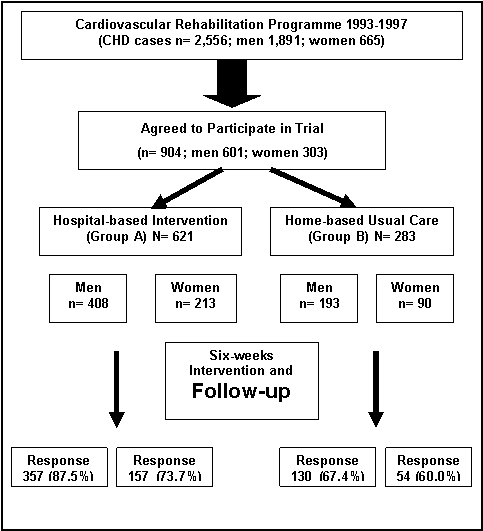
| The study was approved by the institutional ethics committee. Successive patients presenting to the cardiology department of this tertiary care centre in western India have been enrolled in the cardiac rehabilitation programme. Patients with stable coronary artery disease (documented stable angina or survivors of acute coronary syndromes) visiting the cardiology department in years 1993 to 1997(n=2556; men 1891, women 665) were enrolled in the rehabilitation program. The mean age of the subjects was 54.5 years. An informed consent regarding participation in the rehabilitation protocol was required from each patient. 903 subjects (men 601, women 303) agreed to participate in the study. These subjects were randomly divided into hospital-based intervention (Group A) and home-based usual care (Group B) groups. Two Group A cases were recruited for each Group B subject and there were 408 men and 213 women in Group A and 193 men and 90 women in Group B. All the subsequent analyses were done with intention-to-treat principle (Figure 1). | ||||||||||||||||||||||||||||||||||||||||||||||||||||||||||||||||||||||||||||||||||||||||||||||||||||||||||||||||||||||||||||||
| All the subjects reported personal information (educational status, socio-economic status, family history of CHD, smoking, diabetes, hypertension and physical activity according to the WHO protocol.16 Pulse, blood pressure, weight and height were recorded and body-mass index (BMI) was calculated by dividing the weight (Kg) by squared height (metres). Fasting blood was analysed for glucose, total cholesterol, HDL cholesterol and triglycerides. LDL cholesterol was calculated by formula: LDL= total cholesterol - (triglycerides/5+HDL). A resting electrocardiogram was performed for all and a treadmill stress test was performed using a modified protocol. Metabolic equivalents (METs) were calculated from standard nomograms. | ||||||||||||||||||||||||||||||||||||||||||||||||||||||||||||||||||||||||||||||||||||||||||||||||||||||||||||||||||||||||||||||
| In the GBD Study (2000)4 it was reported that in South Asian region (including India) of the total annual mortality of 6.36 million in men and 5.76 million in women a large number of deaths were attributable to hypertension, high cholesterol, overweight, physical inactivity and poor diet. In combination, all these risk factors led to 1.79 million deaths in men and 1.63 million deaths in women (28% of total deaths). Tobacco caused 0.78 million deaths in men and 0.13 million deaths in women. Thus, a large absolute burden of cardiovascular disease deaths in developing countries, especially India, that was forecast in early 1990's has been confirmed. | ||||||||||||||||||||||||||||||||||||||||||||||||||||||||||||||||||||||||||||||||||||||||||||||||||||||||||||||||||||||||||||||
| Figure 1: The study protocol and response rates. | ||||||||||||||||||||||||||||||||||||||||||||||||||||||||||||||||||||||||||||||||||||||||||||||||||||||||||||||||||||||||||||||
 |
||||||||||||||||||||||||||||||||||||||||||||||||||||||||||||||||||||||||||||||||||||||||||||||||||||||||||||||||||||||||||||||
| Table 1: Baseline Characteristics of the Study Groups | ||||||||||||||||||||||||||||||||||||||||||||||||||||||||||||||||||||||||||||||||||||||||||||||||||||||||||||||||||||||||||||||
|
||||||||||||||||||||||||||||||||||||||||||||||||||||||||||||||||||||||||||||||||||||||||||||||||||||||||||||||||||||||||||||||
| BMI body-mass index, LDL low density lipoprotein cholesterol, HDL high density lipoprotein cholesterol, METs metabolic equivalents. | ||||||||||||||||||||||||||||||||||||||||||||||||||||||||||||||||||||||||||||||||||||||||||||||||||||||||||||||||||||||||||||||
| All the subjects received health education regarding smoking cessation, modified American Heart Association Step II diet, and regular home-based physical activity that included advise regarding walking. The drug therapy was based on the discretion of the treating physician. No patient was on lipid-lowering drug therapy. The hospital based exercise protocol included mild-to-moderate intensity walking, cycling and calisthenics. Eleven types of exercises (walking forward, walking backward, toe-raising, calisthenics and stretching, and cycling were included. The subject was scheduled to attend this programme three times a week for six weeks. In the first week each exercise was performed for two minutes (total 22 minutes), for three minutes each in second and third week (33 minutes), four minutes each in fourth and fifth week (44 minutes) and six minutes each in the sixth week (66 minutes) at every attendance. At the end of six weeks the subjects were re-assessed. BMI, blood pressure and lipid profile were determined and effort tolerance evaluated by stress test and METs calculated. | ||||||||||||||||||||||||||||||||||||||||||||||||||||||||||||||||||||||||||||||||||||||||||||||||||||||||||||||||||||||||||||||
| Statistical analysis: Gender-specific analysis was done. Continuous variables are reported as mean±1 standard deviation and ordinal data as percent. Inter-group comparison has been performed using t-test or a chi-square test as appropriate. P value <0.05 was considered significant. | ||||||||||||||||||||||||||||||||||||||||||||||||||||||||||||||||||||||||||||||||||||||||||||||||||||||||||||||||||||||||||||||
| RESULTS |
||||||||||||||||||||||||||||||||||||||||||||||||||||||||||||||||||||||||||||||||||||||||||||||||||||||||||||||||||||||||||||||
| Successive patients with stable coronary artery disease (documented stable angina or survivors of acute coronary syndromes) visiting the cardiology department who gave an informed consent (n= 904; men 601, women 303) were enrolled in the rehabilitation program. Stable angina pectoris (documented by resting ECG, positive stress test or abnormal coronary angiogram) was the commonest coronary syndrome (males 71%, females 84.7%). Survivors of inferior wall myocardial infarction (males 21.8%, females 11.7%) and anterior or anterolateral myocardial infarction (males 7.2%, females 3.6%) were also enrolled. | ||||||||||||||||||||||||||||||||||||||||||||||||||||||||||||||||||||||||||||||||||||||||||||||||||||||||||||||||||||||||||||||
Baseline characteristics of the study groups are reported in Table 1. There was no difference in mean age and in prevalence of various coronary risk factors in different groups. There was low prevalence of moderate grade leisure-time physical activity. In Group A as compared to Group B there was no significant difference in hypertension (men 47.5 vs. 47.9%, women 43.7 vs. 50.0%), diabetes (men 21.1 vs. 27.3%, women 20.7 vs. 30.1%), overweight/ obesity (BMI25 kg/m2; men 22.1 vs. 20.7%, women 25.4 vs. 34.4%) hypercholesterolaemia (total cholesterol 200 mg/dl, men 52.1 vs. 52.7%, women 48.4 vs. 55.5%), hypertriglyceridaemia (triglycerides 150 mg/dl, men 41.2 vs. 51.8%, women 41.8 vs. 45.6%) or low HDL cholesterol (HDL  40 mg/dl, men 53.9 vs. 58.9%, women 51.2 vs. 50.0%). The low physical activity status was confirmed as only a minority of the study subjects in both groups (men 48.0 vs. 45.0%, women 23.6 vs. 32.5%) were able to achieve exercise capacity of 6.0 METs on the treadmill stress test score. 40 mg/dl, men 53.9 vs. 58.9%, women 51.2 vs. 50.0%). The low physical activity status was confirmed as only a minority of the study subjects in both groups (men 48.0 vs. 45.0%, women 23.6 vs. 32.5%) were able to achieve exercise capacity of 6.0 METs on the treadmill stress test score. |
||||||||||||||||||||||||||||||||||||||||||||||||||||||||||||||||||||||||||||||||||||||||||||||||||||||||||||||||||||||||||||||
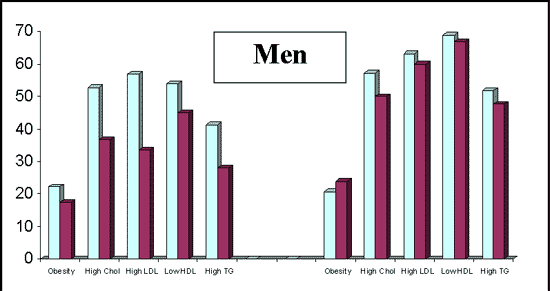
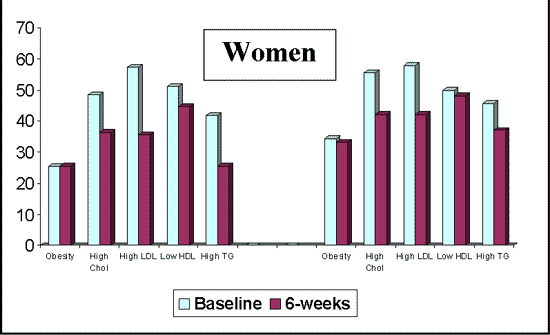
| Reassessment of body-mass index, blood lipid levels (total cholesterol, LDL, HDL, triglycerides) and exercise performance was performed at the end of six weeks. The response rates for the second examination is shown in Figure 1 and 357/408 men (87.5%) and 157/213 women (73.7%) in Group A and 130/193 men (67.4%) and 54/90 women (60.0%) in Group B underwent the assessment. At the end of 6-week follow-up in Group A there was a significant decline in BMI (24.2±5.5 to 23.1±5.1 Kg/m2), total cholesterol (194.8±39 to 160.7±95 mg/dl), LDL cholesterol (126.0±47 to 101.6±59 mg/dl) and triglycerides (133.3±69 to 122.3±72 mg/dl) and increase in exercise METs score (5.5±1.7 to 7.1±1.2) (p<0.05). In Group A subjects there was significant decrease (%change, 95% confidence intervals (CI)) in prevalence of high total cholesterol 200 mg/dl (men -16.0%, 8.9 to 23.1%; women -12.1%, 1.9 to 22.3%), high LDL cholesterol130 mg/dl (men -23.3%, 16.2 to 30.4%; women -21.6%, 11,3 to 31.9%), high LDL cholesterol100 mg/dl (men -36.4%, 29.4 to 43.4%; women -41.6%, 31.3 to 51.9%), and high triglycerides150 mg/dl (men -13.2%, 6.4 to 20.0%; women -16.3%, 6.5 to 26.1%) (p<0.01) (Table 2, Figure 2). |
||||||||||||||||||||||||||||||||||||||||||||||||||||||||||||||||||||||||||||||||||||||||||||||||||||||||||||||||||||||||||||||
| Table 2: Changes in Risk Factors in the Study Groups | ||||||||||||||||||||||||||||||||||||||||||||||||||||||||||||||||||||||||||||||||||||||||||||||||||||||||||||||||||||||||||||||
|
||||||||||||||||||||||||||||||||||||||||||||||||||||||||||||||||||||||||||||||||||||||||||||||||||||||||||||||||||||||||||||||
| * p<0.01, ** p<0.001, CI confidence intervals, BMI body mass index, LDL low density lipoprotein cholesterol, HDL high density lipoprotein cholesterol, METs metabolic equivalents | ||||||||||||||||||||||||||||||||||||||||||||||||||||||||||||||||||||||||||||||||||||||||||||||||||||||||||||||||||||||||||||||
| Figure 2: Comparison of prevalence (%) of obesity and lipid abnormalities in Group A (hospital-based intervention, light shade bars) and Group B (home-based usual care, dark shade bars) subjects. Chol = cholesterol, LDL= low density lipoprotein, HDL= high density lipoprotein, TG= triglycerides. There is a significant decline (p<0.01) in prevalence of high total cholesterol, high LDL cholesterol and high triglycerides in both men and women in Group A. Insignificant change in these parameters is seen in Group B subjects. | ||||||||||||||||||||||||||||||||||||||||||||||||||||||||||||||||||||||||||||||||||||||||||||||||||||||||||||||||||||||||||||||
|
||||||||||||||||||||||||||||||||||||||||||||||||||||||||||||||||||||||||||||||||||||||||||||||||||||||||||||||||||||||||||||||
| Prevalence of low HDL cholesterol (<40 mg/dl) did not change significantly. Individuals with good effort tolerance (treadmill METs score6.0) increased in both men (+26.2% , 19.2 to 33.2%) and women (+17.8%, 8.1 to 27.5%) (p<0.001) (Table 2). In Group B subjects there was insignificant decline in BMI (21.9±4.4 to 21.6±4.2 Kg/m2) and no significant change in lipid levels or MET score (5.82±1.4 to 6.64±1.26). Prevalence of overweight or obesity, high total and LDL cholesterol and triglycerides did not change significantly (Table 2). There was a small increase in subjects with good effort tolerance among men (+16.0%, 4.7 to 27.3%) and not in women. |
||||||||||||||||||||||||||||||||||||||||||||||||||||||||||||||||||||||||||||||||||||||||||||||||||||||||||||||||||||||||||||||
| DISCUSSION |
||||||||||||||||||||||||||||||||||||||||||||||||||||||||||||||||||||||||||||||||||||||||||||||||||||||||||||||||||||||||||||||
| This study shows that a simple hospital-based cardiac rehabilitation program focussing on physical exercise improves exercise tolerance and also decreases blood total cholesterol, LDL cholesterol and triglycerides levels over a short-term follow-up. | ||||||||||||||||||||||||||||||||||||||||||||||||||||||||||||||||||||||||||||||||||||||||||||||||||||||||||||||||||||||||||||||
| Exercise capacity consistently improves after cardiac rehabilitation. After three months of aerobic conditioning three times a week at an intensity of 70 to 85 percent of maximal heart rate, exercise tolerance on the treadmill increases by 30-50 percent.4 In the present study, in the intervention group the treadmill MET score increased from 5.5±1.7 to 7.1±1.2, an improvement of 29.1%. Subjects with good effort tolerance also increased and 26.2% men (CI 19.2 to 33.2%) and 17.8% women (CI 8.1 to 27.5%) improved the exercise tolerance to more than 6.0 METs on the treadmill. This improvement is similar to previously reported results. Physiological adaptations to aerobic conditioning in CHD patients include central (cardiac) and peripheral (skeletal-muscle and vascular) adaptations resulting in a widened difference in oxygen content between arterial and venous blood during maximal exercise and an increased capacity to deliver substrate to skeletal and cardiac muscle. Cardiac adaptations include increases in cardiac dimensions, stroke work, cardiac output, and afterload corrected indexes of left ventricular function. Skeletal-muscle adaptations include an increase in fibre area and in oxidative-enzyme activity. Vascular adaptations include an increase in the density of skeletal-muscle capillaries and improvements in endothelial-dependent vasodilatation in both epicardial and resistance coronary arteries. Previously published systematic reviews of cardiac rehabilitation in survivors of myocardial infarction have shown survival benefits of 20-24%. Oldridge et al6 and O'Connor et al7 and performed meta-analysis of 21 randomised trials of cardiovascular rehabilitation with exercise and reported that cardiac rehabilitation was associated with a 25% reduction in overall mortality and mortality from cardiovascular causes at three years. Substantial physiological and clinical benefits of exercise were the mechanisms of this benefit although participants in such studies were more likely to adopt healthier lifestyles and consume drugs known to enhance cardiovascular health.4 These studies were performed before the widespread use of ACE inhibitors, beta-blockers and statins in CHD patients and the benefits of exercise-rehabilitation in current patient population may be lower. We have not studied the hard outcome measures and cannot comment on this aspect. The mechanisms of exercise-related decreases in mortality are multifactorial and include favourable lipid effects, improvements in endothelium-mediated coronary vasodilatation, changes in body composition, increased heart rate variability and autonomic tone, increased fibrinolysis and improvements in psychological factors.4 The present study shows a decline in total and LDL cholesterol levels, triglycerides and body-mass index in the hospital-based exercise group. There was a significant decrease in number of subjects with hypercholesterolaemia (men -16.0%, women -12.1%) and hypertriglyceridaemia (men -13.2%, women -16.3%). Currently available lipid-lowering therapies especially statins decrease total cholesterol by 30-60% and triglycerides by 20-40% over a six-week period.1,2 As the present study was done before the widespread availability of statins in India, this effect may be attenuated due to widespread use of statins presently. In a meta-analysis of randomised trials of secondary prevention programmes in coronary heart disease and importance of cardiac rehabilitation, McAlister et al12 analysed data from 12 trials. Sample size in different trials varied from 98 to 2,326 with an average of 863 subjects per study. The patients enrolled in these programmes were usually survivors of acute myocardial infarction or with stable coronary heart disease and the end-points determined were either acute coronary syndrome, deaths or hospitalisations. It was concluded that formal cardiac rehabilitation programs (disease management programs) improve processes of care, reduce admissions to hospital, and enhance quality of life or enhance functional status in these patients. The impact on survival and recurrent infarctions, and cost-effectiveness of these programmes remain uncertain. The present study is also similar in size to these studies and report an improve outcome on a short-term. The study was not powered for determination of any definite end-points such as acute coronary events, recurrent hospitalisations etc. because of the short duration. A comprehensive analysis of costs of cardiac rehabilitation in CHD patients was performed in Sweden.17 At five years, the rate of cardiac related hospitalisation was lower in rehabilitation group as compared to controls and a larger proportion of patients in the rehabilitation group had returned to work (53% vs. 38%) with diminished costs of sick leave. In the overall analysis, the costs of rehabilitation were offset by lower rates of hospitalisation and work productivity resulting in a total cost savings at five years of US $12,000 per patient for the Swedish healthcare system. Oldridge et al6 and Ades et al18 reported that the cost effectiveness of cardiac rehabilitation, adjusted for quality of life, was US $9,2000 and US $4,950 respectively per year of life saved. Our model is very inexpensive and associated with a free medical care system in India and could be more cost-effective although in the absence of long-term data and mortality statistics it is difficult to derive cost-benefit equations.19 Exercise as a cardiovascular therapy needs strong recommendation although more studies are needed within this country. |
||||||||||||||||||||||||||||||||||||||||||||||||||||||||||||||||||||||||||||||||||||||||||||||||||||||||||||||||||||||||||||||
| REFERENCES |
||||||||||||||||||||||||||||||||||||||||||||||||||||||||||||||||||||||||||||||||||||||||||||||||||||||||||||||||||||||||||||||
|
||||||||||||||||||||||||||||||||||||||||||||||||||||||||||||||||||||||||||||||||||||||||||||||||||||||||||||||||||||||||||||||
Available Volumes
| EDITOR IN CHIEF |
| Dr.
Rajeev Gupta (MD PhD FACC) |
 |
| HON. EDITOR |
| Dr.
Soneil Guptha (MD FACC FESC) |
USEFUL LINKS |
 |